
Candler County Arrest Records and Court Charges
Candler County arrest records are law-enforcement records tied to an arrest, booking, incident, or custody event. They may involve the Sheriff's Office, jail, arresting officer, incident report, warrant, or booking process. The formal court charge record begins later or at the same early stage when the prosecutor files a complaint, accusation, information, or indictment with the court. That charge record is what the criminal case follows.
This distinction matters in Candler County because no official public jail roster or mugshot database was located on the Sheriff's site. Sheriff John Miles's office publishes contact information and a records request form. The court side is handled through Jenny Grimes, Clerk of Superior Court, for Superior, State, Juvenile, and Magistrate filings. For custody and jail details, use the Candler County inmate records channel. For the full court case file, disposition, and sentence, use the Candler County criminal court records page.
Candler County Court Charges After Arrest
After an arrest, the case does not become a conviction just because a charge appears. Law enforcement may make the arrest, Magistrate Court may be involved in warrants or first hearings, and a prosecutor decides what charge to file or pursue. In Candler County, felony charges are handled by the District Attorney in Superior Court. State Court misdemeanor and traffic prosecutions are handled by the Solicitor-General. Magistrate Court may create warrant and preliminary-hearing records that feed into the criminal court process.
The court charge record should be read count by count. One arrest can produce several charges. A charge can be amended, reduced, dismissed, transferred, nolle prossed, or resolved by plea or trial. The charge record is therefore a status record as much as a name of offense. It must be checked against the final disposition before anyone treats it as an outcome.
Process: Arrest or warrant › booking or release decision › complaint, accusation, information, or indictment › arraignment › charge status changes › disposition.
Candler County Charging Documents
Charging documents are the bridge between arrest records and the court case. Georgia terminology can vary by court and case type, and the research file specifically identifies indictments and accusations as part of criminal case records. The table below keeps the categories practical: a complaint is an early charging or sworn allegation form, an information or accusation is filed by a prosecutor in many state criminal contexts, and an indictment is a grand-jury charging document used for felony prosecution.
| Document | Who files or returns it | Candler County use | What to verify |
|---|---|---|---|
| Complaint | Officer, complainant, or prosecutor depending on setting. | May appear near the start of lower-court or warrant-related matters. | Whether it opened the case or supported a later charge. |
| Accusation or information | Prosecutor. | Common prosecutor-filed charge path for misdemeanors and some state criminal cases. | Offense name, count, filing date, and current status. |
| Indictment | Grand jury. | Important for felony prosecution in Superior Court. | Each count, any amendments, and the final disposition. |
Find Candler County Arrest Records and Charges
The search route depends on the part of the event being checked. For arrest or incident records, the Candler County Sheriff's Office is the local law-enforcement agency, with the jail and Sheriff's Office at 1015 E Hiawatha Street, Metter, GA 30439. Dispatch and main phone are 912-685-2568, and the Sheriff's records request form is the documented online fallback for law-enforcement records. For formal charges and court dispositions, the court record runs through the Clerk of Superior Court at 35 SW Broad Street, Metter, GA 30439, phone 912-685-5257. If the case is a city citation or ordinance matter, Metter Municipal Court and the City of Metter police channel may be involved.
- Decide whether the search is for arrest, booking, incident report, charge filing, court status, or final disposition.
- For arrest-side records, contact the Sheriff's Office or use its records request form.
- For filed court charges, contact the Clerk of Superior Court or the specific court that owns the case.
- For State Court traffic or misdemeanor citations, check whether PayYourTix applies before requesting a full case copy.
- For final proof, request a certified disposition instead of relying on a charge name or custody note.
The Georgia offender search guidance explains the state distinction between Georgia Department of Corrections offenders and county jail inmates.
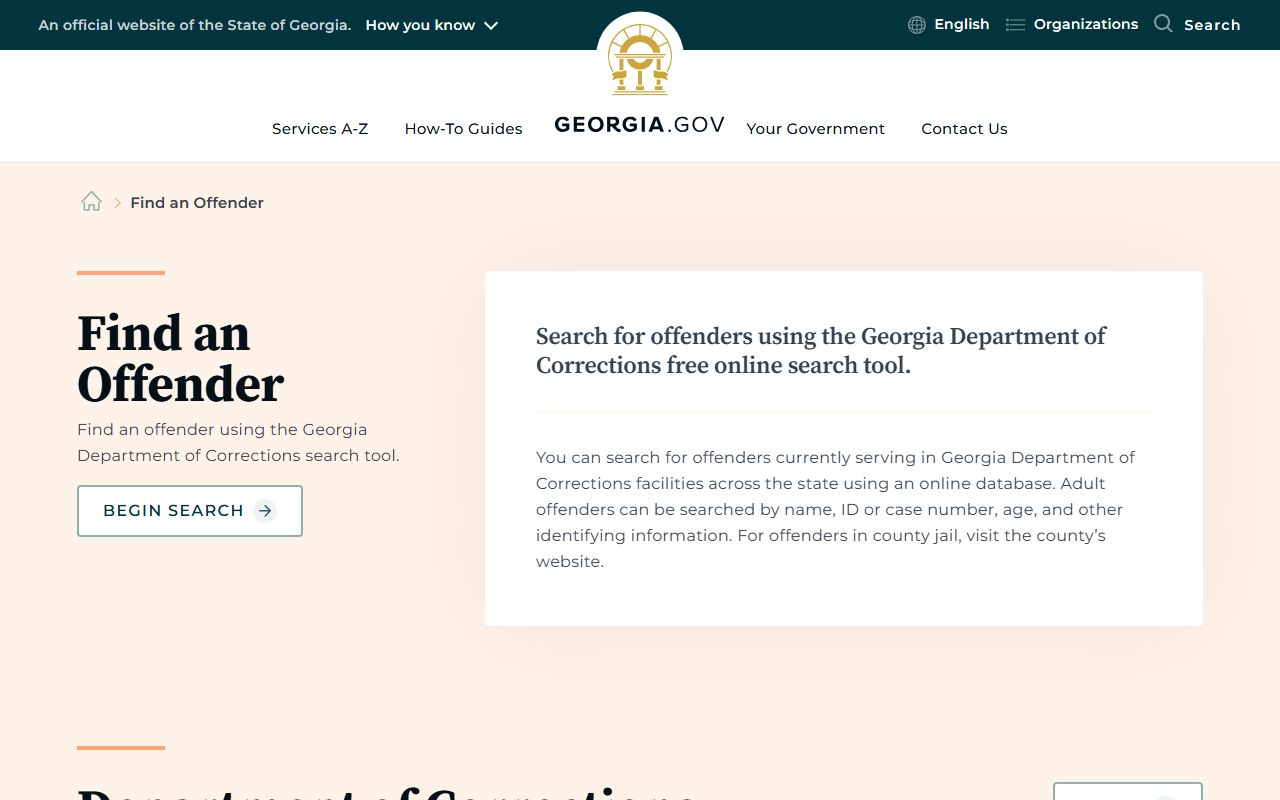
That state guidance is useful after conviction or state custody, but it is not a substitute for Candler County arrest records or a court disposition.
State Offender Data and Charge Limits
The Georgia DOC offender query is a state-prison and offender tool, not a local jail roster. It can be relevant when a person has moved beyond the Candler County arrest stage into a sentenced state correctional setting. It should not be used to infer that a current Candler County arrestee is in custody if the county jail has not confirmed it.
The Georgia DOC offender query includes fields for name, physical descriptors, institution, offense, conviction county, active or inactive status, photos, GDC ID, and case number.
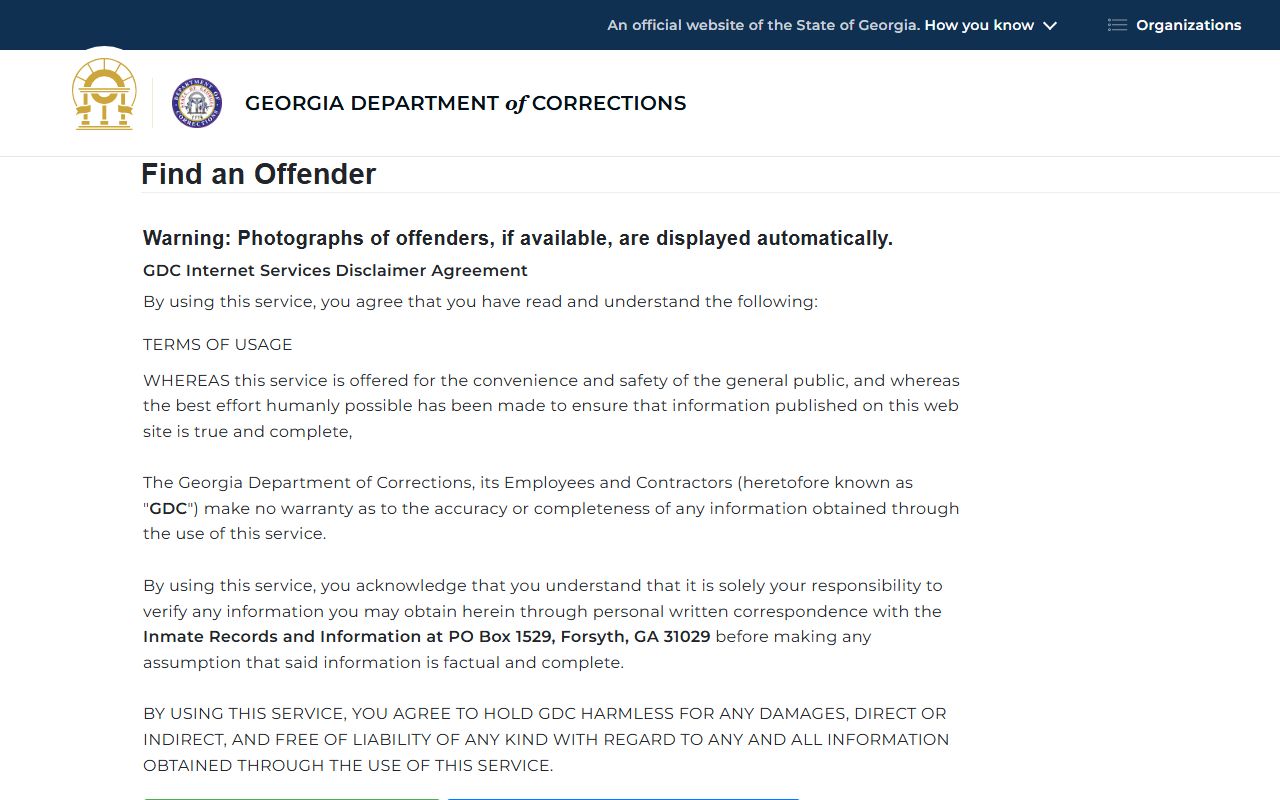
Use DOC data as a state custody or offender-history check, then verify Candler County court charges with the clerk or court record.
| DOC field | How it can help |
|---|---|
| Name fields | Search by last, first, middle, or alias when identifying a sentenced offender. |
| Most Recent Institution | Can include CANDLER COUNTY JAIL as a selectable institution, but local custody still needs county confirmation. |
| Offense | May help narrow state offender records after conviction. |
| Conviction County | Can be used to filter for Candler County convictions in state data. |
| Case number or GDC ID | Helps separate people with similar names. |
Candler County Charge Status Terms
Charge status is where many arrest-record searches go wrong. A charge may be filed, then changed as the case develops. Prosecutors can amend or reduce a count. A court can dismiss a count. A prosecutor can enter nolle prosequi, which means the state is not pursuing that charge in that case. A plea or verdict can create a conviction on one count while other counts are dismissed.
| Status | What it means | What to check next |
|---|---|---|
| Pending | The charge has not reached final disposition. | Next hearing, bond, motions, or arraignment status. |
| Amended | The charge wording, count, or legal theory changed. | Whether the older charge remains active or was replaced. |
| Reduced | The charge moved to a lesser offense or lower severity. | Final plea or sentence tied to the reduced count. |
| Dismissed | The court or prosecutor ended the charge in that case. | Whether dismissal was with prejudice, without prejudice, or tied to another plea. |
| Nolle prosequi | The prosecutor chose not to pursue the charge. | Whether any other counts remain open or ended in conviction. |
| Disposed | The charge has an outcome entered in the case. | Certified disposition from the clerk. |
Registry and Victim Notification Records
Some charge and conviction information appears in state systems after a case reaches a qualifying outcome. The GBI sex offender registry is governed by Georgia law and is not the same thing as a general arrest record. It should be used for registry information, not to find every Candler County arrest or every pending charge.
The GBI sex offender registry is the public portal for Georgia registry searches.
Registry results should be read as registry records, then compared with the court disposition if the exact case outcome matters.
Victim notification is another separate channel. Georgia VINELink can help with custody notification where supported.

VINELink is useful for notification, but it does not replace a court charge record, arrest report, or certified criminal disposition.
Charge vs Conviction in Candler County
A Candler County arrest record can lead to a court charge, but a court charge is not a conviction. The charge says what the state alleges. The conviction says what was proved, admitted by plea, or otherwise resolved as a guilty outcome. A record can show several filed charges with only one conviction, no convictions, or a conviction on a reduced charge.
| Point | Charge | Conviction |
|---|---|---|
| Meaning | An accusation filed after arrest or investigation. | A guilty outcome, plea, or verdict entered by the court. |
| Where it appears | Charging document, docket, warrant record, or accusation. | Disposition, sentencing order, probation record, and certified copy. |
| Can change | Yes, it can be amended, reduced, dismissed, or nolle prossed. | It can be appealed or restricted only through legal process. |
| Best proof | Current docket or filed charging document. | Certified disposition from the Clerk of Superior Court. |
Federal Custody After Candler County Cases
Most local arrest records and court charges are not federal records. If a case becomes a federal prosecution or if a person is sentenced to federal custody, county sources may no longer show the full custody path. Candler County is in the Southern District of Georgia for federal court purposes, while federal inmate custody is searched through the Bureau of Prisons.
The Federal Bureau of Prisons inmate locator is the federal custody search channel.
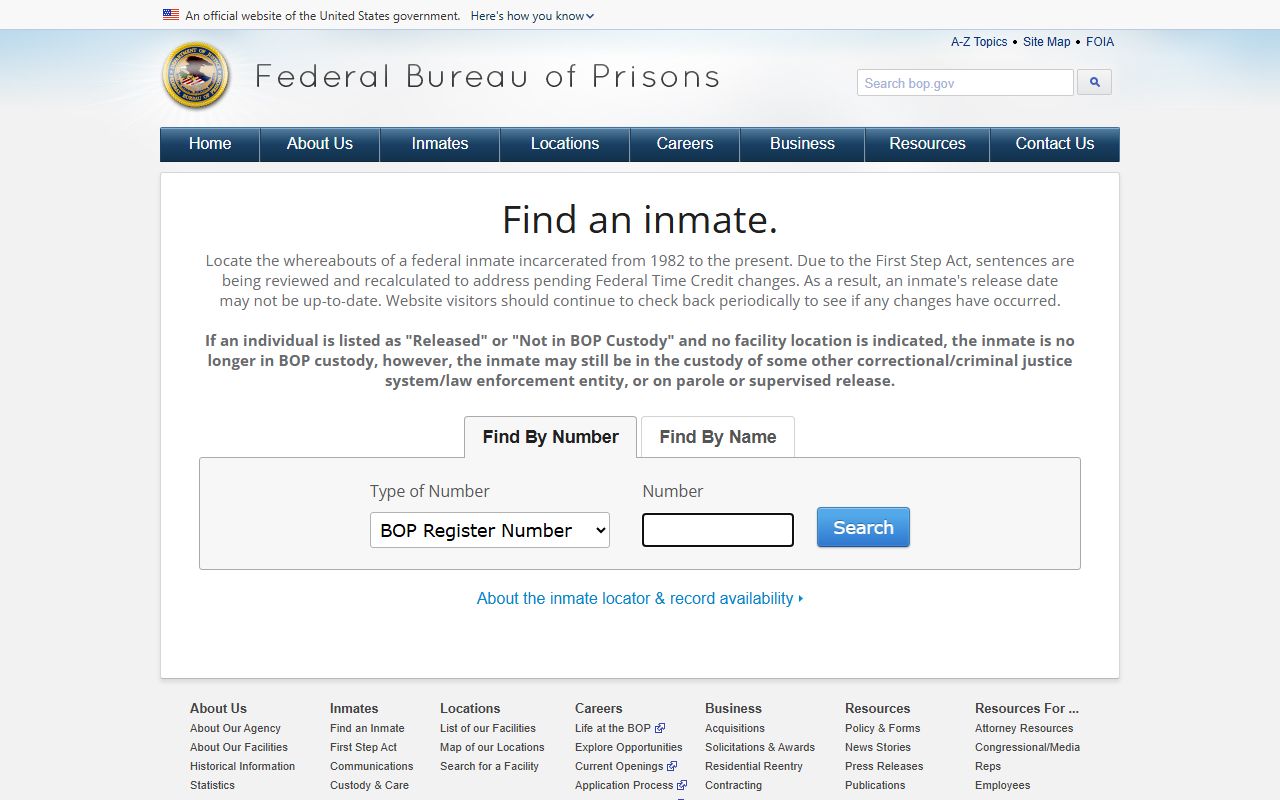
Use the federal locator only for federal custody questions. Candler County arrest reports and local court charges still route through local law enforcement and court records.
Restricted Candler County Arrest Records
Georgia record access has limits. Juvenile cases, sealed warrants, sealed indictments, protected victim details, personal identifiers, mental-health information, and restricted criminal history should not be treated as open public search data. Georgia's record restriction law, O.C.G.A. 35-3-37, can limit eligible criminal-history access for non-criminal-justice purposes. Eligibility depends on the charge, outcome, timing, and legal process.
If a Candler County charge was dismissed, nolle prossed, or ended without conviction, the next step is to collect the arresting agency, court, case number, charge, and disposition. Some record restriction paths involve the arresting agency or prosecutor, while others require court action. The Clerk of Superior Court can provide case documents and final disposition records, but the clerk cannot erase or restrict a record without legal authority.
| Point | Sealed or restricted | Expunged or record restricted |
|---|---|---|
| Public access | Hidden, withheld, or redacted from ordinary public inspection. | Limited for eligible criminal-history dissemination under Georgia law. |
| Common examples | Juvenile, sealed warrant, adoption, mental-health, or protected victim information. | Eligible non-conviction or other outcomes covered by Georgia restriction rules. |
| Who to contact | The court, clerk, sheriff, or agency that maintains the record. | Clerk, prosecutor, arresting agency, or legal counsel depending on the path. |
| What it is not | It is not a public lookup failure. | It is not automatic deletion of every government file. |
Note: A charge name should be checked against the final court disposition before it is treated as an outcome.